
Blog Overview:
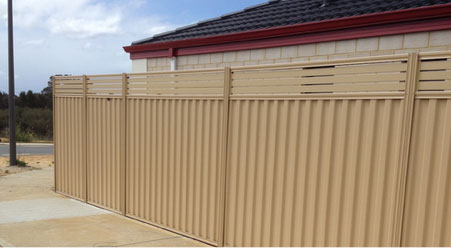
A leaning Colorbond fence is usually caused by underlying issues like shallow footings, soil movement, poor drainage, or wind pressure—not the steel panels themselves. This guide explains the most common reasons fences lean in Australian conditions and when it’s time to have the problem professionally assessed.
A leaning Colorbond fence is a common issue across Australia, especially in older installations or areas exposed to weather extremes. While Colorbond steel itself is durable, the fence system relies heavily on what’s below ground and how it was installed. When one part fails, the entire fence line can start to move.
Here are the real reasons your Colorbond fence is leaning—and what’s actually happening beneath the surface.
1. Inadequate Footings or Shallow Post Depth
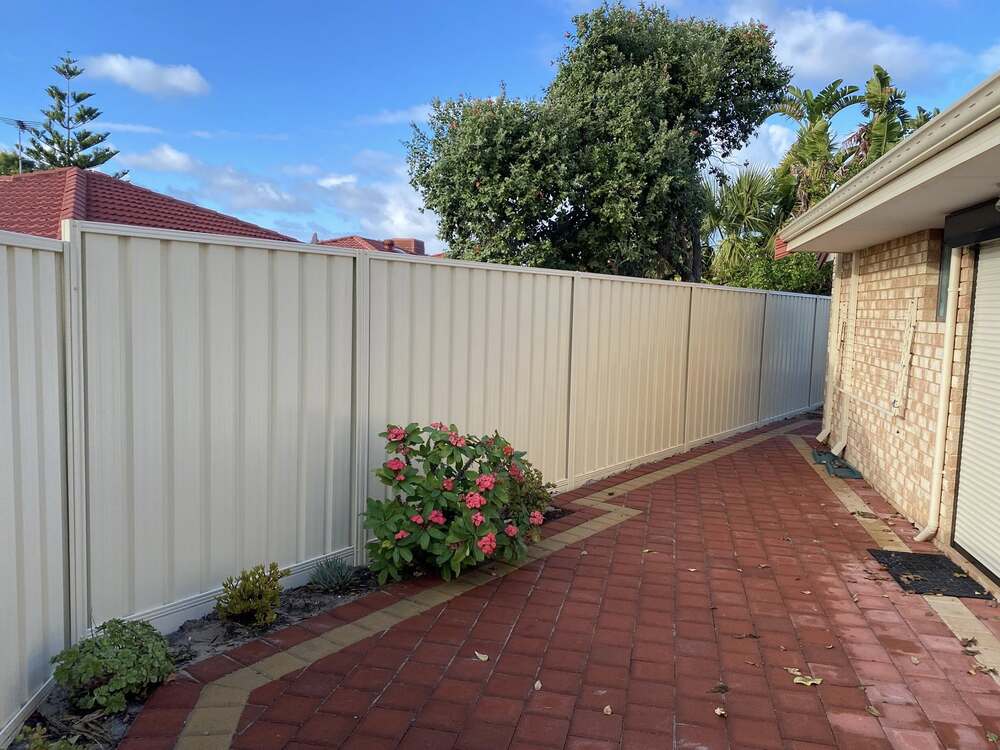
The most common cause is poor post foundations.
Colorbond fence posts must be set deep enough and secured with properly cured concrete. If posts were:
- Set too shallow
- Installed with insufficient concrete
- Backfilled instead of concreted
they won’t resist lateral pressure over time. Once soil shifts or moisture levels change, posts loosen and the fence begins to lean.
This is especially common in:
- DIY installations
- Fast, low-cost installs
- Older fences installed before current best practices
2. Reactive Clay Soils and Ground Movement
Large parts of Australia sit on reactive clay soil, which expands when wet and shrinks when dry. This constant movement places pressure on fence posts year-round.
Over time, this causes:
- Concrete footings to crack
- Posts to tilt as soil pulls away
- Uneven fence lines after seasonal changes
Even a correctly installed fence can lean if the footing depth or concrete mass wasn’t designed for reactive soil conditions.
3. Water Runoff and Poor Drainage
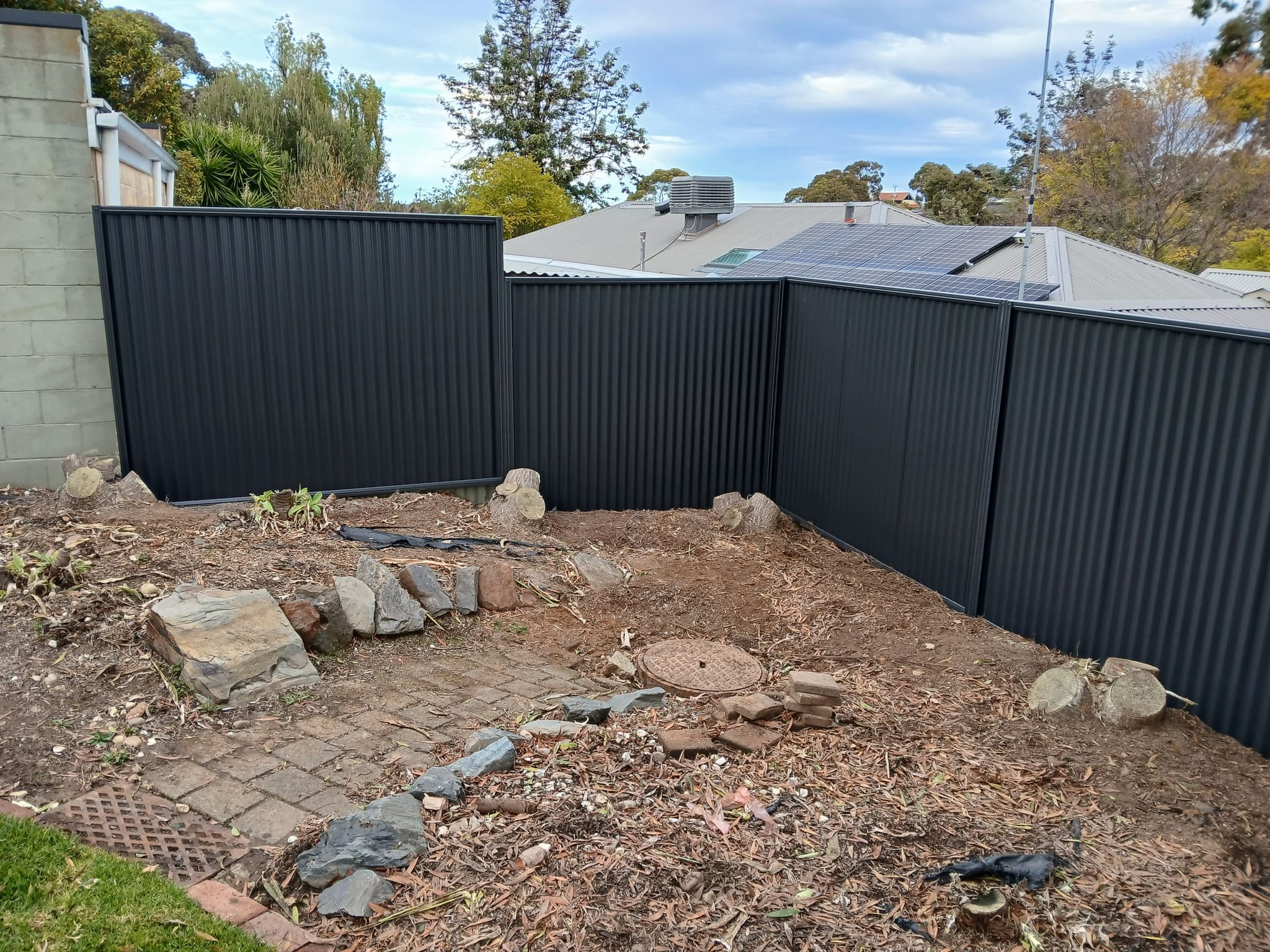
Water is one of the biggest enemies of fence stability.
Common drainage-related causes include:
- Downpipes discharging near fence posts
- Poor yard grading directing water to the fence line
- Water pooling at the base of posts
When soil becomes saturated, it loses strength. Posts can shift, rotate, or sink on one side, causing a visible lean.
This issue often worsens after:
- Heavy rain events
- Storm seasons
- Landscaping changes nearby
4. Wind Load and Fence Height
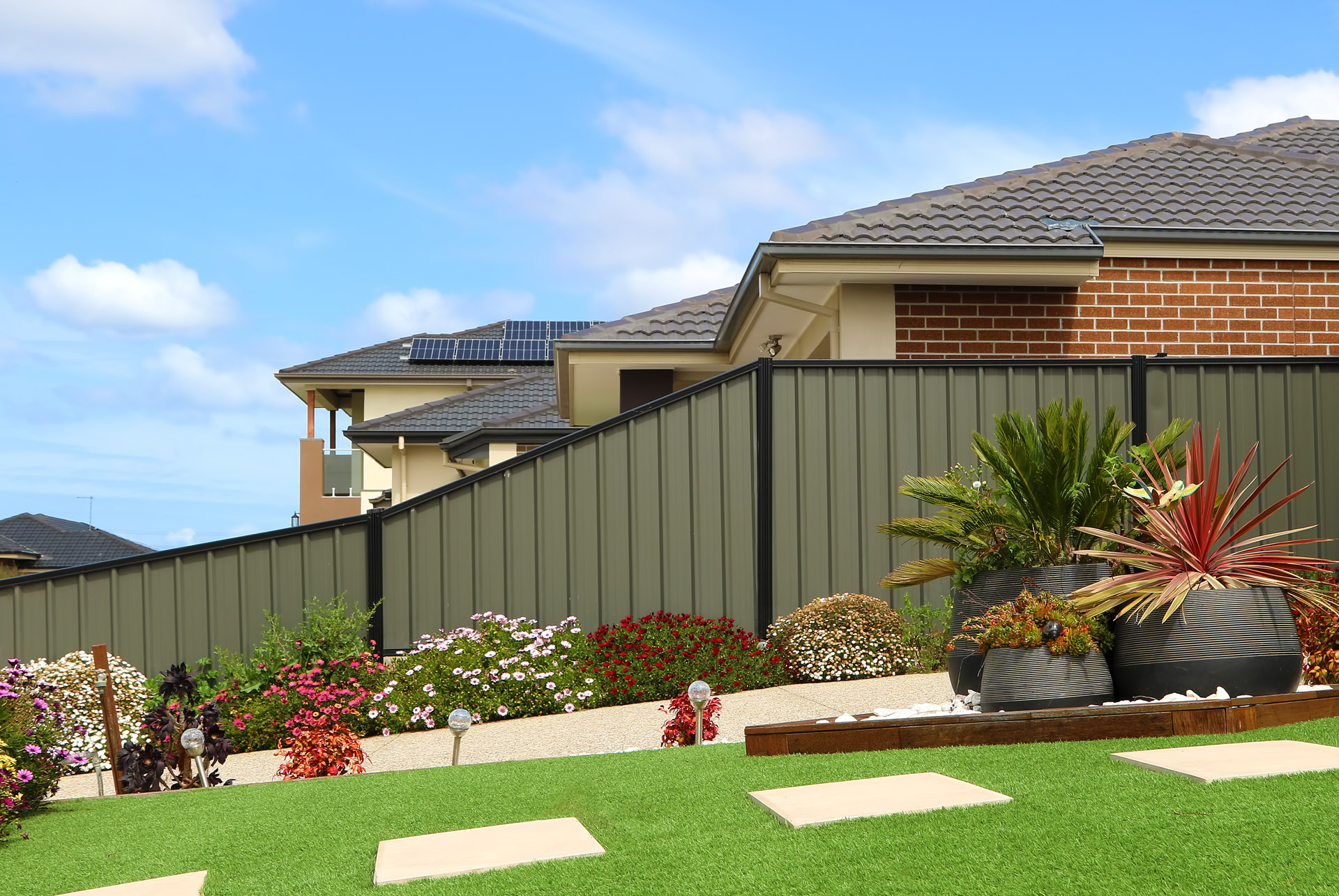
Colorbond fencing acts like a solid sail. In high-wind areas, repeated pressure adds stress to posts and footings.
Problems occur when:
- Posts are spaced too far apart
- Fence height exceeds what the footing design can support
- Wind exposure wasn’t considered during installation
Over time, wind load gradually pushes posts out of alignment, especially along long, uninterrupted fence runs.
5. Corrosion at Ground Level
While Colorbond steel is corrosion-resistant, ground-level exposure is still a risk if:
- Posts weren’t properly sealed
- Soil remains damp for long periods
- Concrete wasn’t finished correctly around the post
Corrosion weakens the post where it matters most—right at the footing—making it easier for the fence to lean or fail.
6. Impact or Added Load
Sometimes the cause is simple and physical:
- Vehicles nudging the fence
- Heavy objects leaning against it
- Trees or roots pushing from below
Even small impacts can shift a post slightly. Over time, that small movement becomes a visible lean along the fence line.
Can a Leaning Colorbond Fence Be Fixed?
In many cases, yes—but the solution depends on the cause.
Common fixes include:
- Resetting or replacing posts with deeper footings
- Re-concreting affected sections
- Improving drainage along the fence line
- Reinforcing posts in high-wind areas
Temporary bracing or surface-level fixes rarely last. If the footing is compromised, it must be corrected properly to prevent the problem from returning.
When to Call the Professionals
If your Colorbond fence is leaning, it’s usually a sign of an underlying structural issue—not just cosmetic wear.
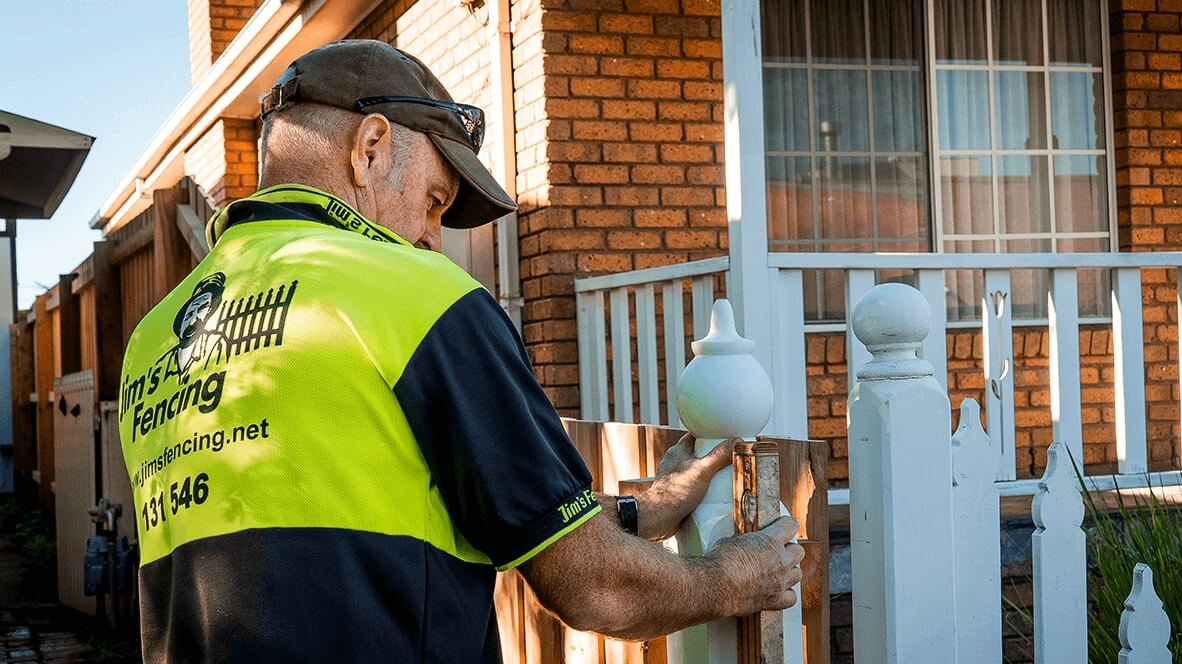
Jim’s Fencing specialises in diagnosing and fixing fence movement caused by soil conditions, poor footings, drainage issues, and weather exposure. With local knowledge across Australian conditions, their team can assess whether your fence needs repair, reinforcement, or partial replacement—saving you from repeat failures and unnecessary costs.
If your fence is starting to lean, addressing it early can prevent a full collapse later.